


Therapy for First Responders, Military & Healthcare Professionals in York, PA
The work doesn’t always stay at work.
When your job asks you to respond, care for others, or stay composed through difficult situations, some of it can follow you home.
Tides of Change offers specialized counseling for first responders, military personnel, healthcare professionals, and their families.
SUPPORT FOR THOSE WHO SERVE
Different roles. Same human experience.
Some careers ask you to function normally in situations that aren’t normal.
Repeated exposure to crisis, danger, loss, unpredictable schedules, public scrutiny, and the pressure to remain composed can affect sleep, mood, relationships, health, and your sense of safety.
Sometimes the impact is connected to one experience you can clearly identify. Sometimes it builds gradually- the calls, shifts, losses, difficult cases, long hours, and things you learned to compartmentalize because the job required you to keep moving.
Tides of Change provides specialized mental health support for first responders, military personnel, veterans, healthcare professionals, and their families.
The goal isn’t to tell you how you should feel about the work.
It’s to give you somewhere you don’t have to carry all of it alone.

FIRST RESPONDER THERAPY IN YORK, PA
You shouldn’t have to explain the culture before you can talk about the experience.
There can be real barriers to seeking mental health support when your professional identity is built around being the person who handles difficult things.
You may be used to taking care of the problem yourself. You may worry about being judged, appearing weak, or whether someone outside the profession could understand what the work is actually like.
Privacy or career concerns can make reaching out feel complicated. Shift work and unpredictable schedules don’t exactly make traditional appointments easier, either.
And sometimes the biggest barrier is simpler:
You don’t want to spend half of therapy explaining the job before you can talk about what the job has done to you.
That context matters here.

MEET ED CURTIS, LSW
Firsthand understanding meets clinical experience.
Ed Curtis brings a perspective that isn’t learned exclusively in a therapy office.
As both a first responder and mental health professional with 22 years of experience, Ed brings firsthand understanding of first-responder culture into his clinical work.
His approach is practical, respectful, collaborative, and paced around your readiness. You don’t have to overexplain the realities of the profession before getting to the reason you came in.
Sessions may include education about trauma and occupational stress, identifying triggers, grounding and nervous-system regulation, strengthening sleep and coping routines, processing difficult experiences, and reconnecting with relationships and personal values.
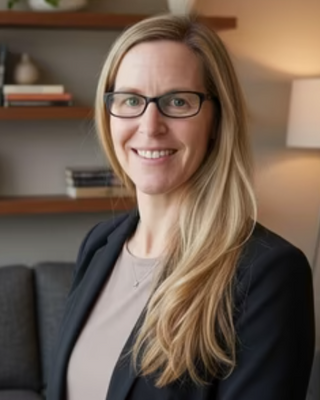
MEET DINA HUTH, LPC, CAADC
Experienced trauma care for people who spend their careers caring for others.
Dina provides specialized support for first responders, military personnel, veterans, healthcare professionals, and military families.
Her work is trauma-informed and grounded in more than 20 years of clinical experience. She supports people navigating trauma, anxiety, depression, grief, addiction and recovery, relationship concerns, and the demands that can come with healthcare, military, and other high-stress professions.
Dina incorporates EMDR and other evidence-based approaches based on each person’s needs.
TRAUMA THERAPY & EMDR
Sometimes knowing you’re safe isn’t enough to make your system believe it.
Occupational stress doesn’t always stay neatly contained to work hours.
A difficult call can replay later. Your body can remain alert long after a situation has ended. Sleep changes. Irritability follows you home. You become numb to things you once reacted to—or find yourself reacting strongly to things that seem unrelated.
Danielle specifically identified both Ed Curtis and Dina Huth as providers of Eye Movement Desensitization and Reprocessing (EMDR) as part of individualized care for distressing experiences and trauma-related concerns.
EMDR is one treatment option. Depending on the clinician and your needs, care may also incorporate trauma-informed therapy, Cognitive Behavioral Therapy (CBT), Acceptance and Commitment Therapy (ACT), mindfulness and grounding, and strengths-based or solution-focused strategies.
You don’t need to decide which approach you need before scheduling.
COUNSELING FOR OCCUPATIONAL STRESS & TRAUMA
You don’t have to wait until the job becomes unbearable.
Therapy can address the things that happen during the work- and the ways they show up everywhere else.
Specialized counseling may address:
-
The impact of repeated exposure to crisis, danger, injury, loss, or other difficult experiences.
-
Feeling depleted, detached, numb, irritable, or increasingly disconnected from the work or people around you.
-
Trouble settling down, staying asleep, disrupted sleep schedules, or difficulty transitioning out of work mode.
-
Increased worry, hypervigilance, depression, irritability, emotional numbing, or changes you’ve noticed in yourself.
-
Processing deaths, difficult cases, professional losses, or experiences that continue to stay with you.
-
Communication, isolation, emotional distance, stress at home, and the ways occupational demands affect the people closest to you.
-
Looking honestly at coping strategies that may have started as a way to manage stress but are creating concerns of their own.
-
Finding room for the person underneath the role and reconnecting with relationships, values, and parts of life outside the job.
Frequently Asked Questions
-
Yes. Tides of Change provides specialized counseling for first responders dealing with the effects of high-stress and demanding work, including cumulative stress, trauma, grief and loss, burnout, anxiety, mood changes, sleep difficulties, substance use concerns, and relationship strain. Care is practical, collaborative, and designed with an understanding that the realities of first-responder work can affect both life on and off the job.
-
Specialized counseling is provided by Ed Curtis, LSW, and Dina Huth, LPC, CAADC. Ed brings firsthand experience as a first responder along with 22 years of mental health experience. Dina has extensive experience supporting first responders, healthcare professionals, veterans, active-duty military members, and military families. Both clinicians offer EMDR as part of individualized treatment for appropriate clients
-
No. You do not need a PTSD diagnosis- or any particular diagnosis- to seek support. Counseling can address cumulative occupational stress, burnout, difficult calls or experiences, grief, anxiety, depression or mood changes, disrupted sleep, relationship difficulties, substance use concerns, and the challenge of separating work from the rest of your life.
-
Yes. Ed Curtis and Dina Huth offer EMDR (Eye Movement Desensitization and Reprocessing) as one option for appropriate clients working through distressing experiences and trauma-related concerns. Treatment is individualized, so EMDR may be used alongside other approaches depending on your experiences, goals, and clinical needs.
-
Yes. Tides of Change’s specialized program includes individual, group, and family sessions. Occupational stress can affect communication, connection, routines, and relationships at home, so family sessions can create space to address those effects together. Your clinician can help determine which format makes the most sense for your needs.

SPECIALIZED COUNSELING IN YORK, PA
You’re used to being the person people call.
You deserve somewhere to bring the things that stay with you, too.
Tides of Change offers specialized counseling for first responders, military personnel, healthcare professionals, and their families in York, Pennsylvania, with in-person and telehealth appointments available.